


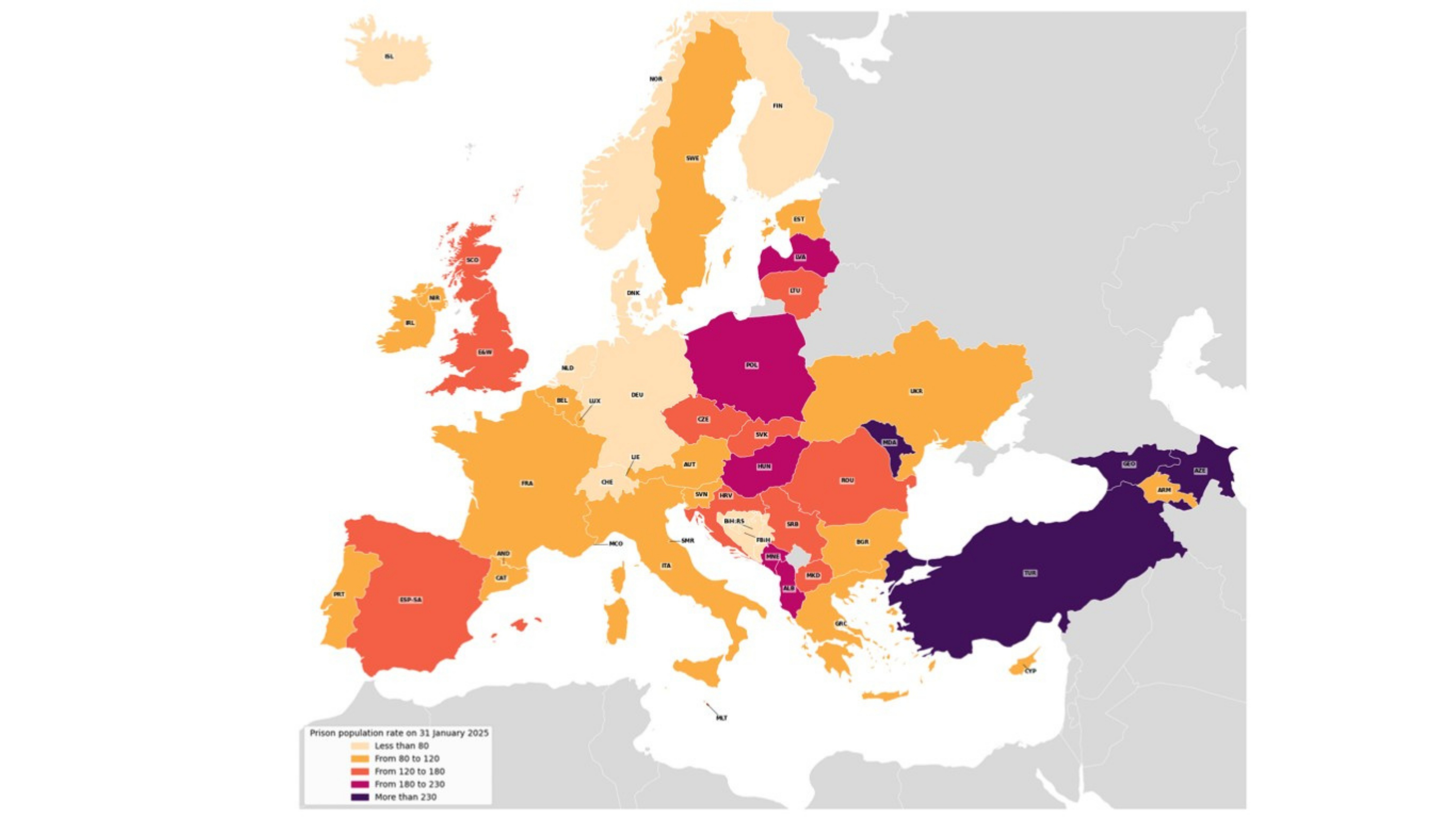
The report, Prisons and Prisoners in Europe 2025: The SPACE I Study, prepared by the Council of Europe and the University of Lausanne, provides an up-to-date overview of Europe’s penal systems. Including data collected from 51 prison administrations across the Council of Europe’s 46 member states, the report shows that Türkiye has the highest rates in Europe in terms of incarceration, prison density, admission rate and number of prisoners per staff member.
458 out of every 100,000 people are in prison
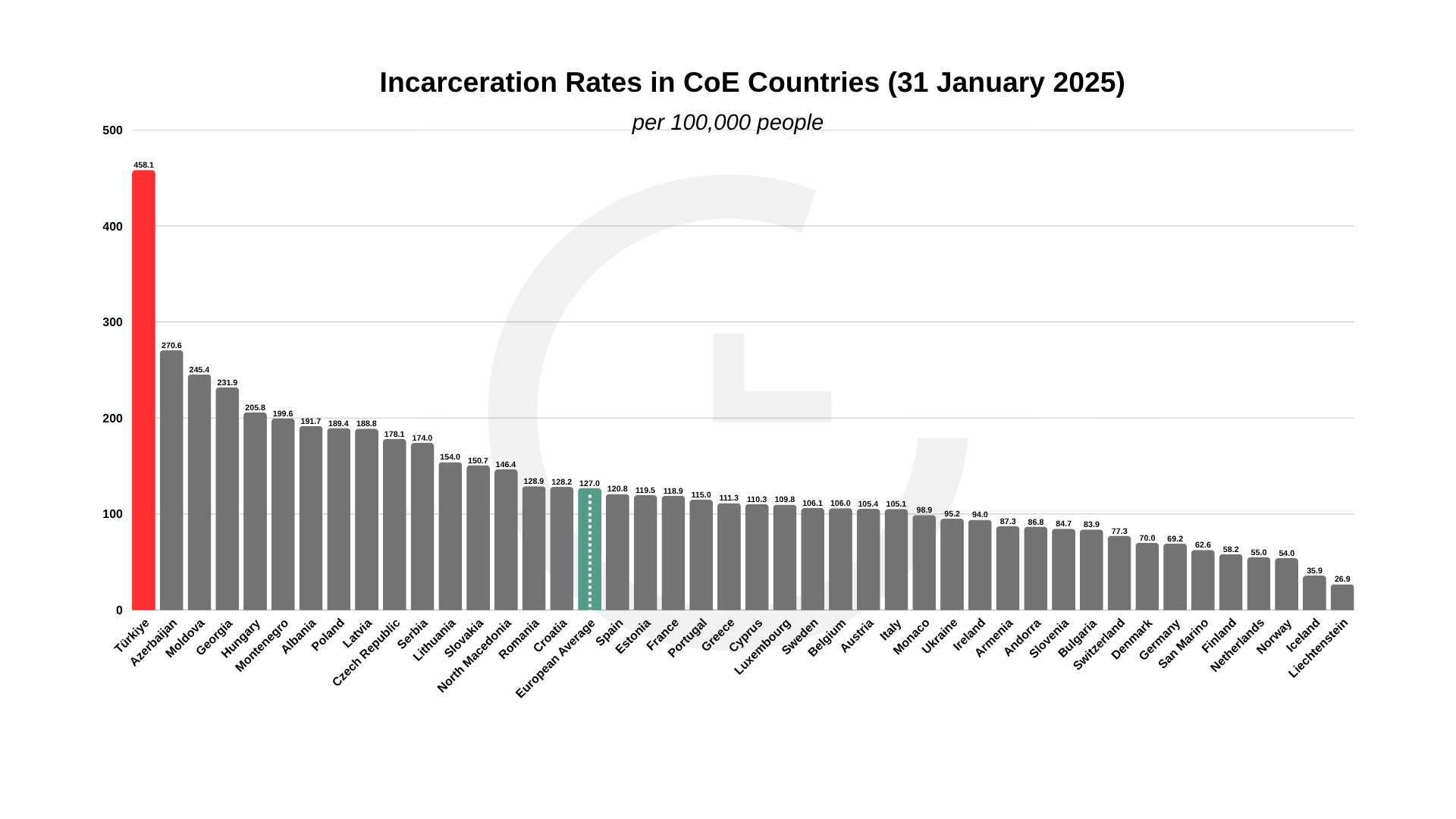
As of 31 January 2025, the total number of prisoners (including prisoners on remand and sentenced prisoners) in prisons in Türkiye was recorded as 392,456. With an incarceration rate of 458.1 per 100,000 people, Türkiye had the highest rate among Council of Europe member states.
The average incarceration rate across Europe is 127 per 100,000 people. Türkiye has the highest rate at 458.1, followed by Azerbaijan (271), Moldova (245) and Georgia (232). By contrast, the rate is just 54 in Norway, which is at the bottom of the list and 55 in the Netherlands.
More than double the increase over the past 10 years
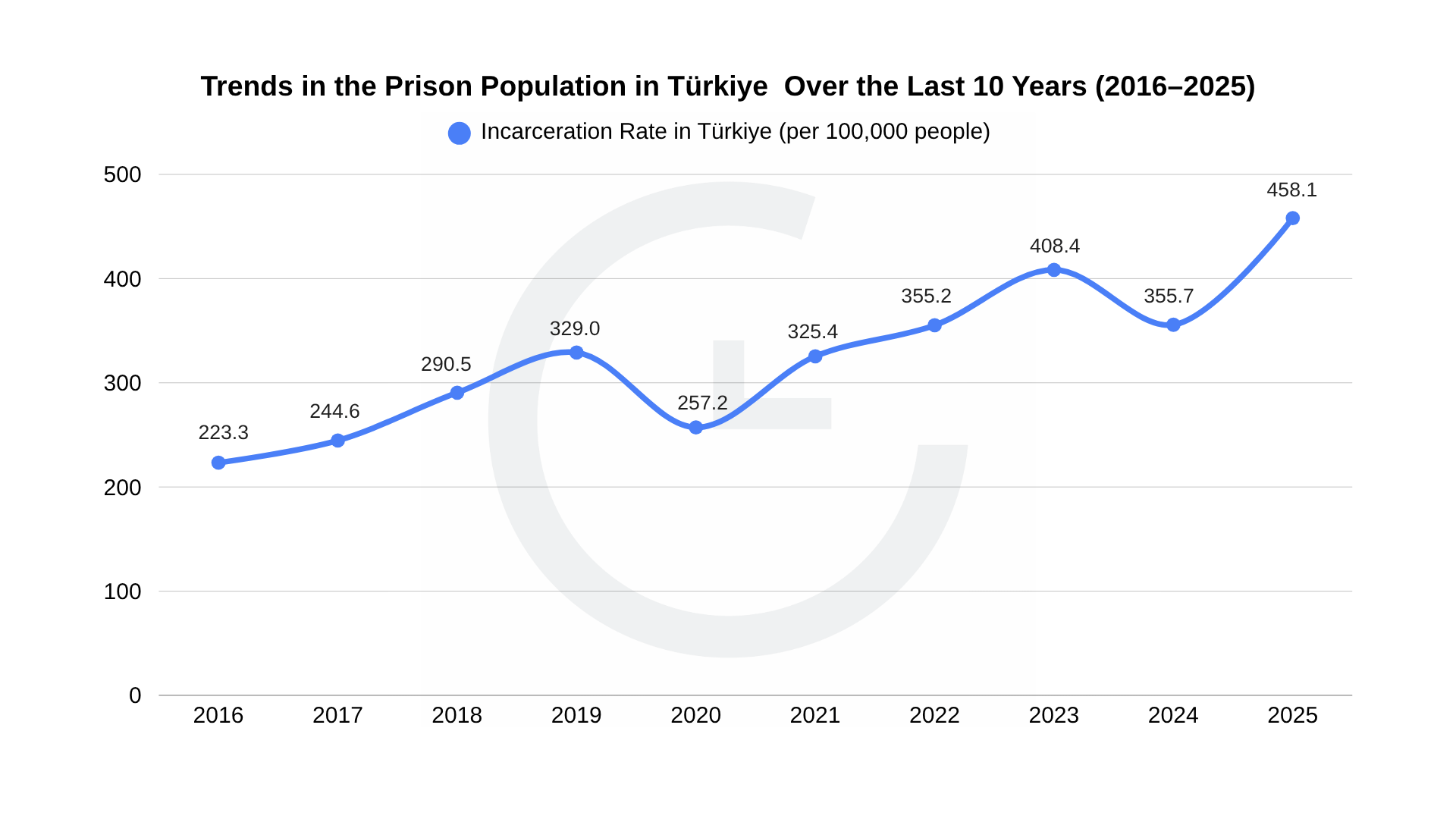
The long-term trends in the report indicate a significant increase in Türkiye’s prison population in recent years. While the number of prisoners per 100,000 people was 223.3 in 2015, this figure had risen to 458.1 by 2025. Therefore, the incarceration rate has increased by over 105% in the last 10 years.
The incarceration rate fell to 257.2 in 2020 due to sentencing adjustments and releases implemented during the pandemic. However, it began to rise again in subsequent years. The rate of increase for the period from 2020 to 2025 was calculated to be around 78%. Data indicate that growth in Türkiye’s prison population has significantly exceeded the European average in recent years.
Overcrowding in prisons in Türkiye is among the highest in Europe
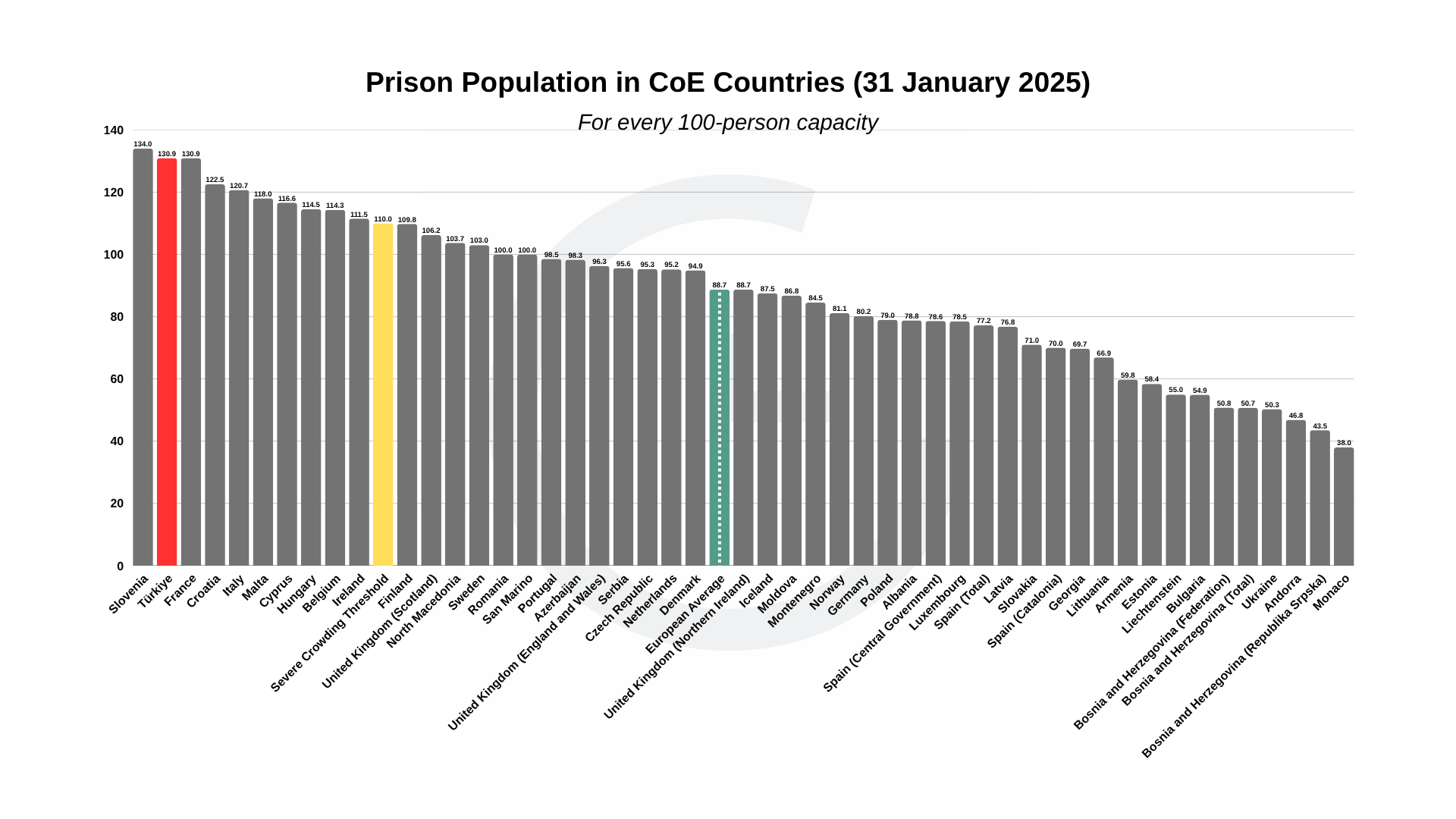
The official capacity of Türkiye’s penal institutions has been reported as 299,880 prisoners. However, the total number of prisoners is 392,456. This equates to 130.9 prisoners for every 100-person capacity. Meanwhile, the average prison population density across Europe stands at 86.
According to the report, the top three countries in Europe in terms of prison density are Slovenia (134%), Türkiye (130.9%) and France (130.9%). They are followed by Croatia (122.5%) and Italy (120.7%).
In a statement submitted by Türkiye to the report, it is noted that overcrowding is managed by providing additional beds and bunk beds. Despite this, it is stated that overnight accommodation is provided for all prisoners on remand and sentenced prisoners in accordance with the law.
Furthermore, the report’s methodology classifies levels above the 110% threshold as ‘severely overcrowded’ and all of the top ten countries have exceeded this critical threshold.
The proportion of women prisoners is lower than the European average
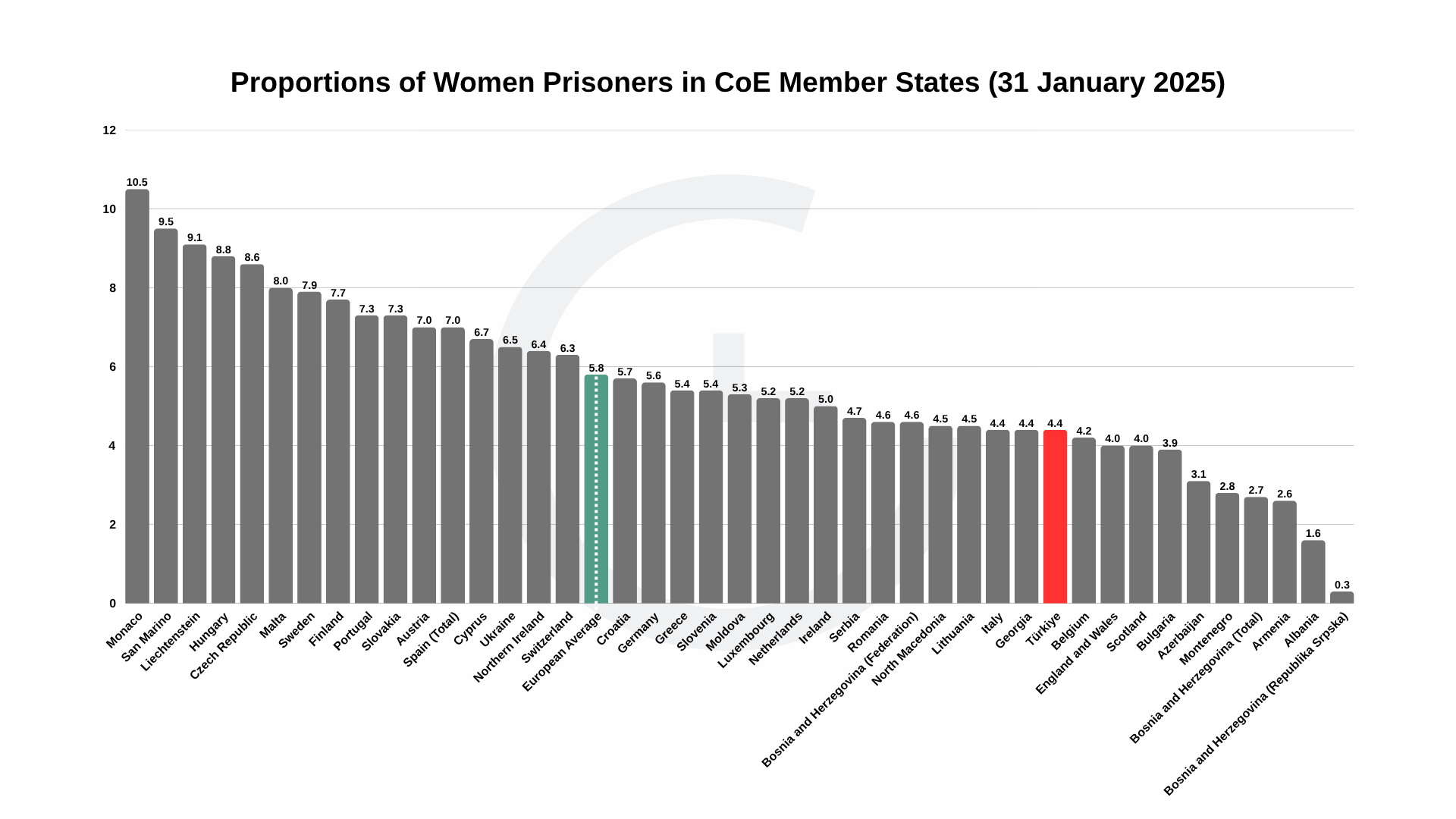
Women make up 4.4% of Türkiye’s prison population. This figure is below the European average of 5.8%. According to the report, Türkiye is one of the countries with a lower proportion of women prisoners than the European average.
The top five European countries with the highest proportion of women prisoners are: Andorra (12.5%), Iceland (12.1%), Monaco (10.5%), San Marino (9.5%) and Liechtenstein (9.1%).
Examining this ranking based on countries with populations of over one million, the top three are Hungary (8.8%), the Czech Republic (8.6%) and Sweden (7.9%).
The percentage of foreign prisoners is low
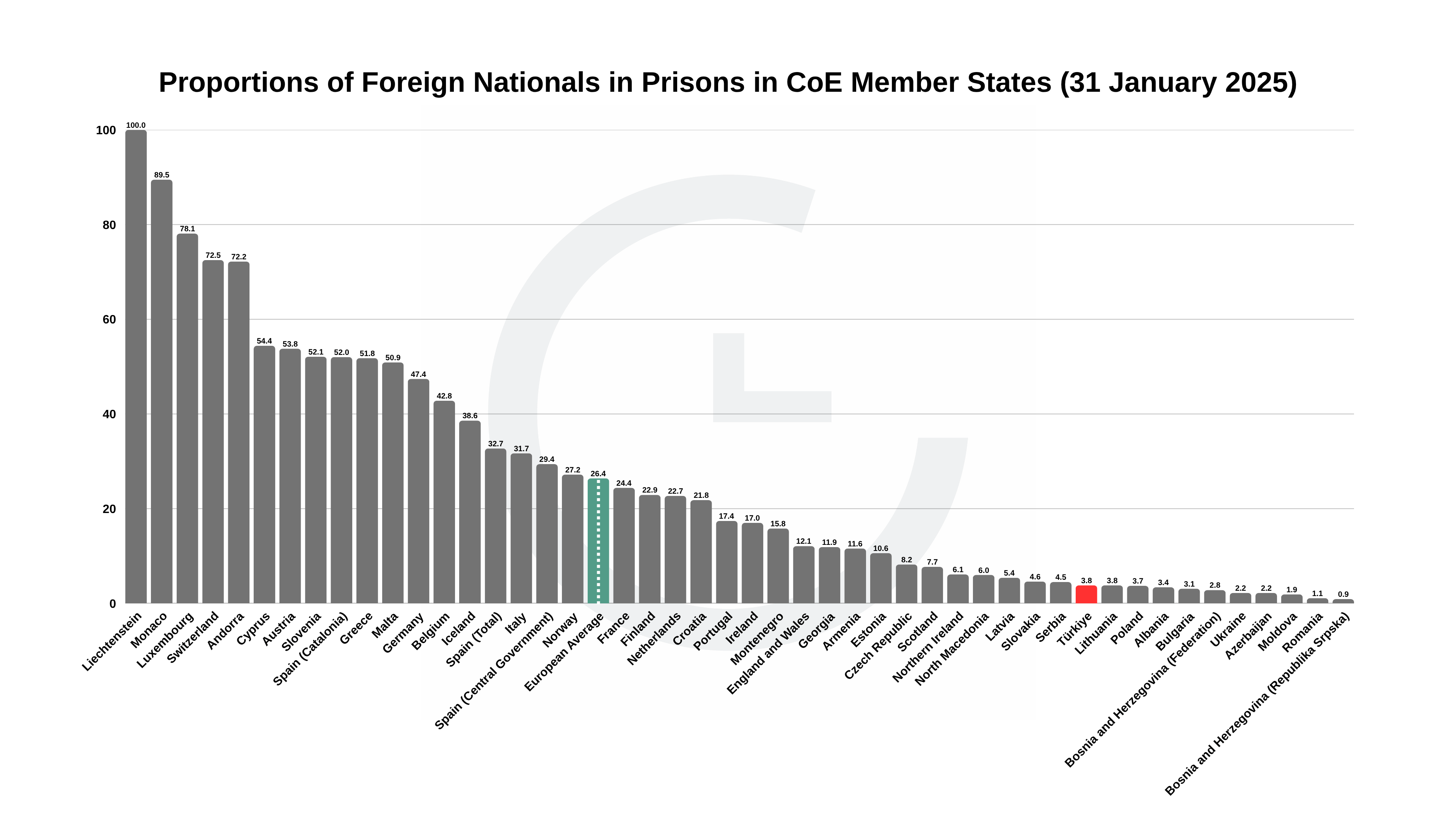
The percentage of foreign nationals among the total prison population in Türkiye was recorded at 3.8%. This is relatively low compared to the average proportion of foreign nationals in prisons across Europe, which stands at 26.4%.
The top five European countries with the highest proportion of foreign prisoners are: Liechtenstein (100%), Monaco (89.5%), Luxembourg (78.1%), Switzerland (72.5%) and Andorra (72.2%). Among countries with a population of over one million, Switzerland is followed by Austria (53%), Slovenia (52%) and Greece (52%).
There are 3,890 children in prisons
The number of children and young people under the age of 18 in prisons in Türkiye is 3,890. Of these, 479 are being held in juvenile reformatories.
Also the report states that 944 children aged 0–6 are living in prisons with their mothers. This is the highest absolute number among Council of Europe countries that shared data.
The differences in methods across different types of crime are striking
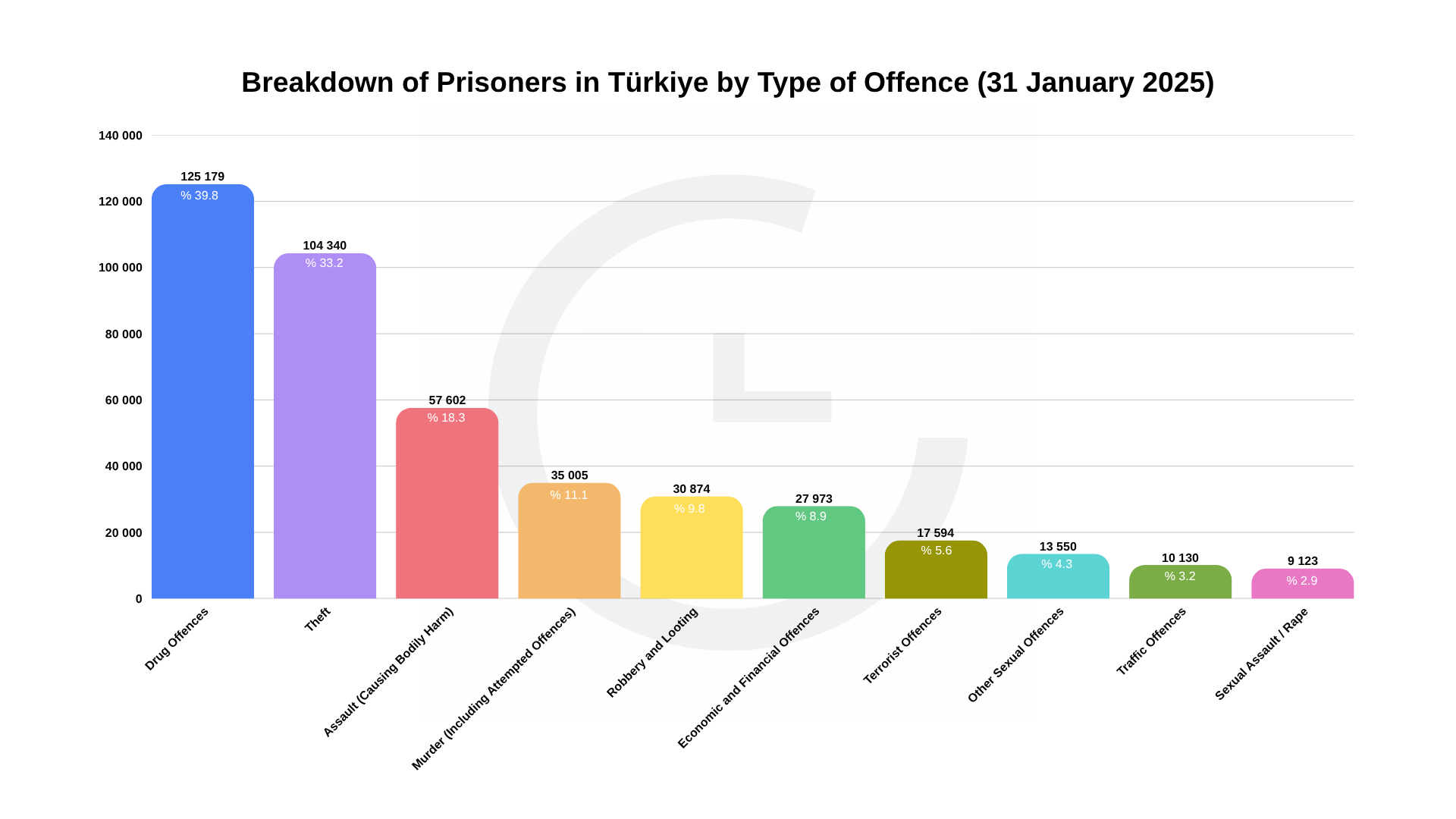
When examining the distribution of crimes committed by prisoners in Türkiye, drug-related crimes rank first at 39.8%. Theft accounts for 33.2%, while murder and attempted murder account for 11.1%. However, the report includes a methodological caveat stating that these figures shouldn’t be directly compared with those of other countries.
While most European countries base their statistics solely on the most severe sentence a person receives, that is, the “primary offense”, Türkiye records all offenses for which a person has been convicted. The report notes that in Türkiye, there is an average of 1.4 offenses per sentenced prisoner. This difference in methodology can cause rates for certain categories of offenses to appear higher compared to other countries.
The incarceration rate is below the European average
The proportion of prisoners on remand in Türkiye whose sentences hadn’t yet been finalised was found to be 14.4% of the total prison population. Meanwhile, the average detention rate across Europe stands at 30.3%.
However, the report notes that individuals in Türkiye who have been convicted by a court of first instance but whose cases are pending before an appellate court or the Supreme Court are officially classified as ‘sentenced’. For this reason, the report emphasises that international comparisons of incarceration rates should be treated with caution.
Long-term prison sentences are on the rise
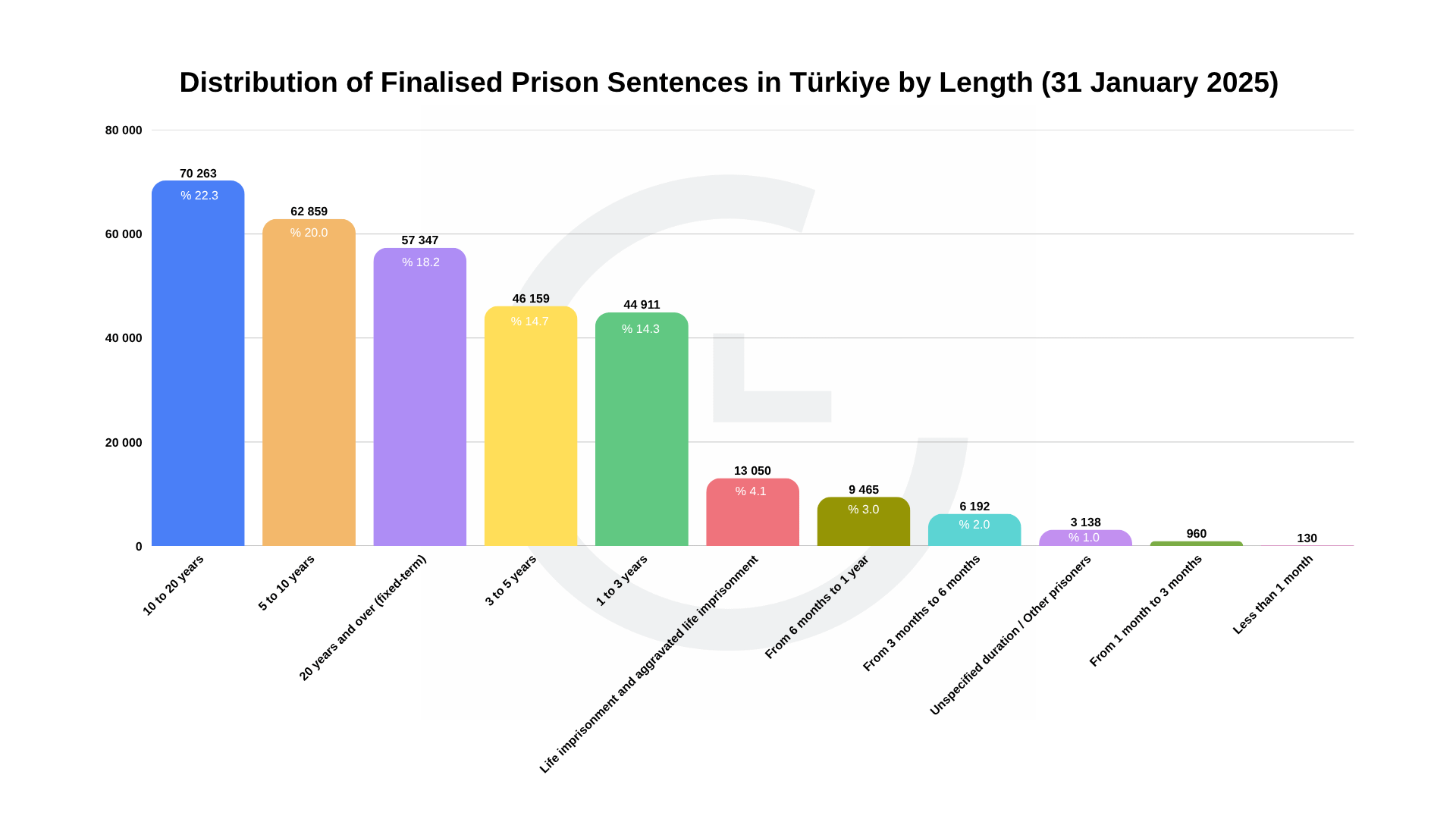
A significant portion of prisoners in Türkiye whose sentences have been finalized are serving long prison terms. The number of individuals serving prison sentences ranging from 10 to 20 years was recorded at 70,263. The number of those sentenced to 20 years or more reached 57,347. The number of prisoners serving life sentences and aggravated life sentences was reported to be 13,050.
Top in Europe for the number of prisoners per staff member
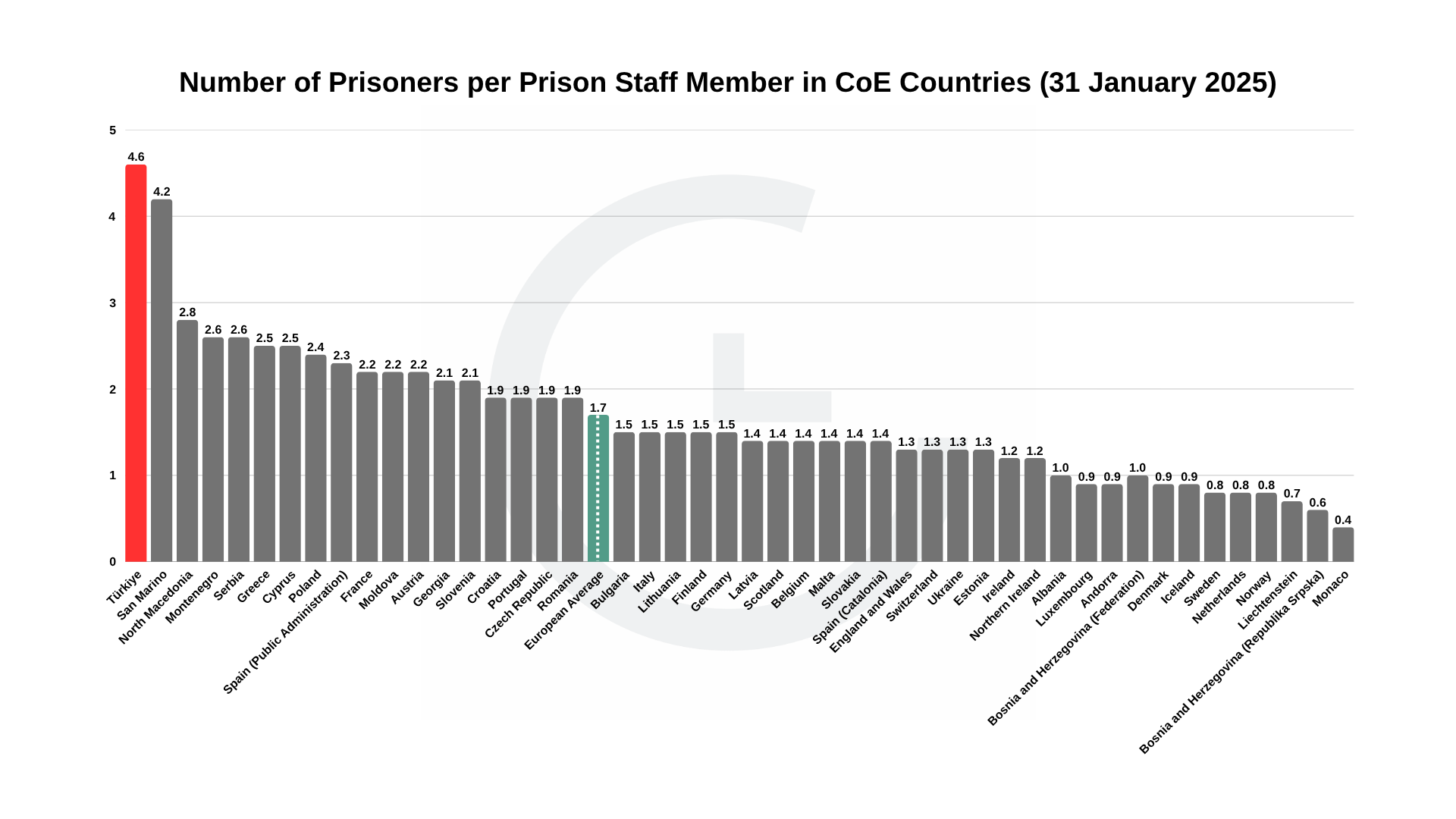
Türkiye also has the highest workload for prison staff in Europe. While the average number of prisoners per staff member across Europe is 1.7, in Türkiye it is 4.6.
In other words, Türkiye has approximately 2.7 times more prisoners per staff member than the European average. In terms of staff workload, Türkiye is followed by Serbia (2.6), Greece (2.5) and Poland (2.4).
457,000 people were incarcerated in one year
The report’s annual flow data reveals that Türkiye not only has a high prison population but is also the country with the highest rate of prison admissions in Europe. Between January 2024 and January 2025, there were a total of 457,175 admissions to prisons in Türkiye, while 345,089 releases were recorded.
With an admission rate of 534 per 100,000 people, Türkiye ranks first in Europe. As a result of this activity, the annual turnover rate of the penal system was reported to be 45.4%.
745 deaths in prisons, 54 of them suicides
Throughout 2024, there were a total of 745 deaths in prisons in the Türkiye. Of these deaths, 54 were recorded as suicides and 2 as homicides. The suicide rate per 10,000 prisoners in Türkiye was calculated at 1.4. With this figure, Türkiye ranks among the European countries with low suicide rates.
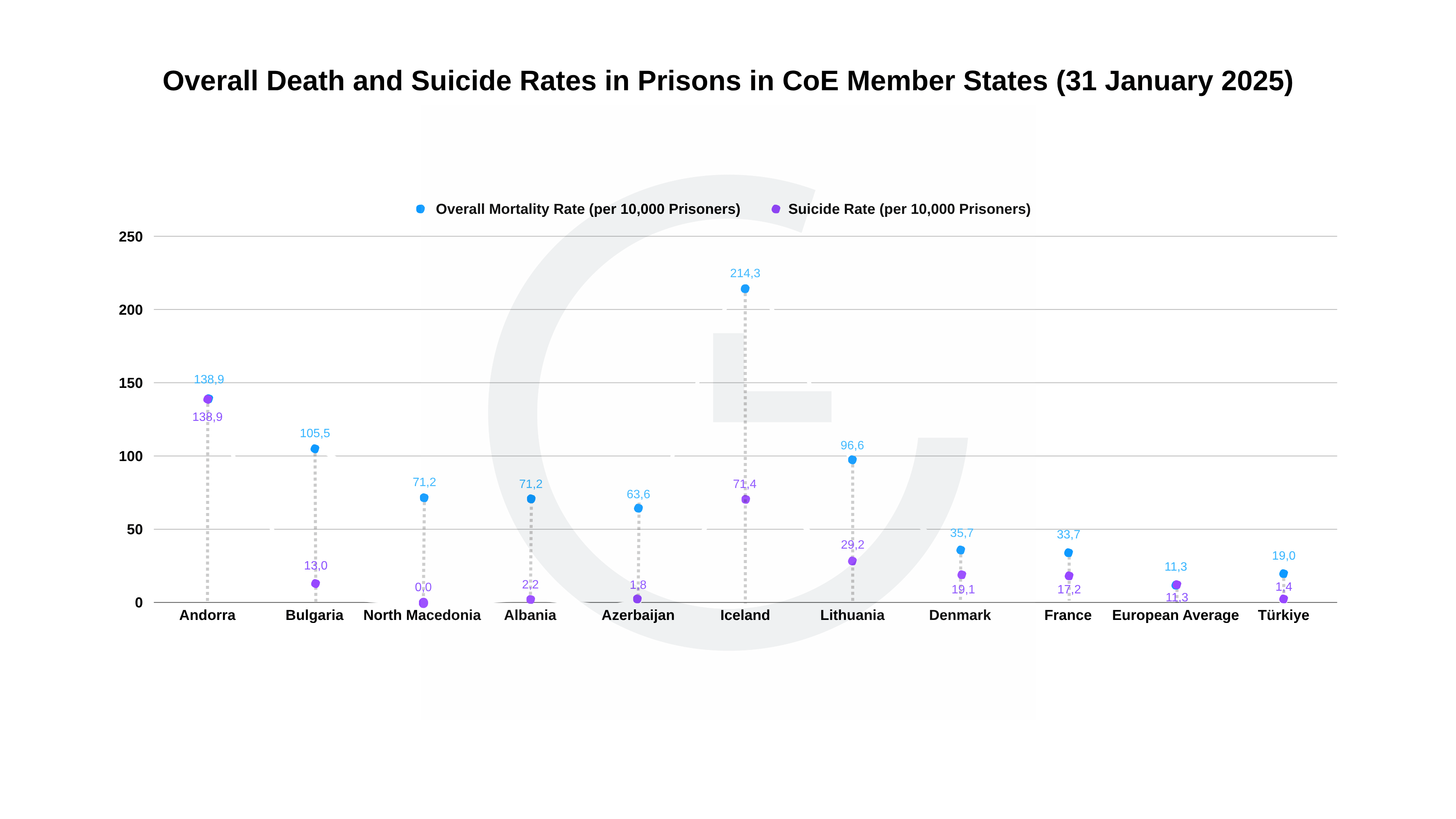
Across Europe, the average overall mortality rate is 11.3 per 10,000 prisoners, while the average suicide rate is also 11.3. According to the report, the top five countries in Europe with the highest death rates per 10,000 prisoners are: Andorra (138.9), Bulgaria (105.5), North Macedonia (71.2), Albania (70.6) and Azerbaijan (63.6).
The top five countries in Europe with the highest suicide rates per 100,000 prisoners are as follows: Andorra (138.9), Iceland (71.4), Lithuania (29.2), Denmark (19.1) and France (17.2).
According to official records, there are eight escapees
Türkiye reported a total of 8 escape cases over the course of one year. A methodological note in the report states that in Türkiye, leaving open prisons or juvenile prisons, whether with or without permission, isn’t technically classified as an “escape” but rather as a disciplinary violation. Therefore, differences in definition must be taken into account when comparing escape data with that of other countries.
One of Europe’s largest prison populations
SPACE I 2025 data reveals that Türkiye has the highest incarceration rate in Europe. Ranking at the top in Europe in terms of incarceration rate, prison density, the volume of new admissions to the system and the number of prisoners per staff member, Türkiye also stands out due to capacity pressures and a growing prison population. The data clearly demonstrates that the growth in the penal system in recent years has exceeded the European average and that prisons are operating under a heavy burden in terms of both capacity and staffing.